Shopify for Pet Supply Brands: What Makes This Niche Different


⏱ 15 min read
A pet store looks like an ordinary catalogue of products until you watch how people actually buy. The same customer orders the same 12 kg bag of food every five weeks, adds a flea treatment on a cycle set by a vet, and abandons a brand the week its recipe changes. That buying pattern, not the product photos, is what makes a Shopify pet store its own kind of business.
Most guides on building a pet ecommerce Shopify store stop at choosing a theme and adding products. This one starts where those leave off. It looks at the economics that decide whether a pet supply store setup actually makes money: repeat-purchase behaviour, thin consumable margins, heavy parcels, and the compliance rules sitting under every bag of food and every health claim.

How Big Is Pet Ecommerce, and Why the Growth Is Different
The numbers are large, but size is not the interesting part. The global pet care ecommerce market was about $101 billion in 2025 and is forecast to reach roughly $147.6 billion by 2030, a compound growth rate of 7.8%, according to Grand View Research’s pet care e-commerce report. Estimates vary widely between research firms because they draw category lines differently, so treat any single figure as a direction, not gospel.
What matters more is how the spend behaves. In the US, total pet industry expenditure reached $158 billion in 2025 and is projected to hit $192 billion by 2030, per the American Pet Products Association. In Europe, FEDIAF counts 140 million households (49% of the total) owning at least one pet, with pet food sales near €29.4 billion, in its 2026 Facts and Figures report. Pets get treated as family, so their budgets hold up when discretionary spending elsewhere gets cut.
The spend is also concentrated in things people buy again and again. In 2024, food and treats alone made up 43.3% of US pet spending, with veterinary care and supplies making up most of the rest.
Pet ecommerce is big and resilient, but the real signal is composition: consumables that get reordered on a cycle dominate spend. That is the fact the rest of your store should be built around.
What Actually Makes the Pet Niche Different
Plenty of DTC categories sell online. Very few combine a fixed reorder cadence, wafer-thin margins on the highest-volume items, heavy parcels, and legal claims on the packaging. Pet supply is one of the few that carries all four at once. The table sets the pet business against a typical fashion or accessories DTC store so the contrast is concrete.
| Dimension | Typical DTC store | Pet supply brand |
|---|---|---|
| Reorder rhythm | Occasional, mood-led | Predictable, on a cycle |
| Top-seller margin | Healthy on hero items | Thin on food, the volume driver |
| Parcel weight | Light, cheap to ship | Heavy and bulky, costly |
| Claims on packaging | Mostly marketing | Legally regulated feed claims |
| Switching trigger | Style or price | Recipe change, vet advice, a bad reaction |
Read down the right-hand column and a strategy falls out of it. Because reordering is predictable, retention beats acquisition here more decisively than in most niches. Because food margin is thin, the money is made on frequency and basket size, not on a single hero sale. Because parcels are heavy, shipping design is a profit lever, not an afterthought. And because claims are regulated, trust and legal accuracy sit on the critical path, not in a footer.
A pet store that copies a generic DTC playbook loses on all four fronts at once. The niche rewards a store built for repeat consumption, not for one-off discovery.
Why Subscription and Replenishment Are the Whole Game
If you learn one number from this niche, learn this one. Around 83% of Chewy’s net sales come from Autoship customers, the recurring-order programme that anchors the largest pure-play pet retailer, per its 2025 investor results. Consumables make up more than 85% of what Chewy sells. That is not a coincidence, it is the model: a repeat-consumption catalogue run through a subscription engine.
The logic scales down to a small store. A one-off food buyer might spend €60. The same buyer on a five-week reorder cycle spends that several times a year without a fresh acquisition cost each time. Lifetime value in pet is a cadence question long before it is a price question, which is why a working Klaviyo replenishment flow often does more for margin than any promotion.
Subscription in pet is not a discount wrapper. It is convenience: the food arrives before the bag runs out. Build it with a dedicated subscription tool rather than a manual coupon, and treat the timing as the product. If your average bag lasts 35 days, the reminder and the reorder should land at day 30, not day 60. Stores selling supplements can start from the same base as subscription apps for supplements, since the consumption logic is identical.
Set your reorder trigger to the real consumption window per SKU, not a flat 30 days. A 4 kg cat food and a 15 kg dog food empty on completely different schedules, and a mistimed reminder is a cancelled subscription.
How Product Type Changes the Economics
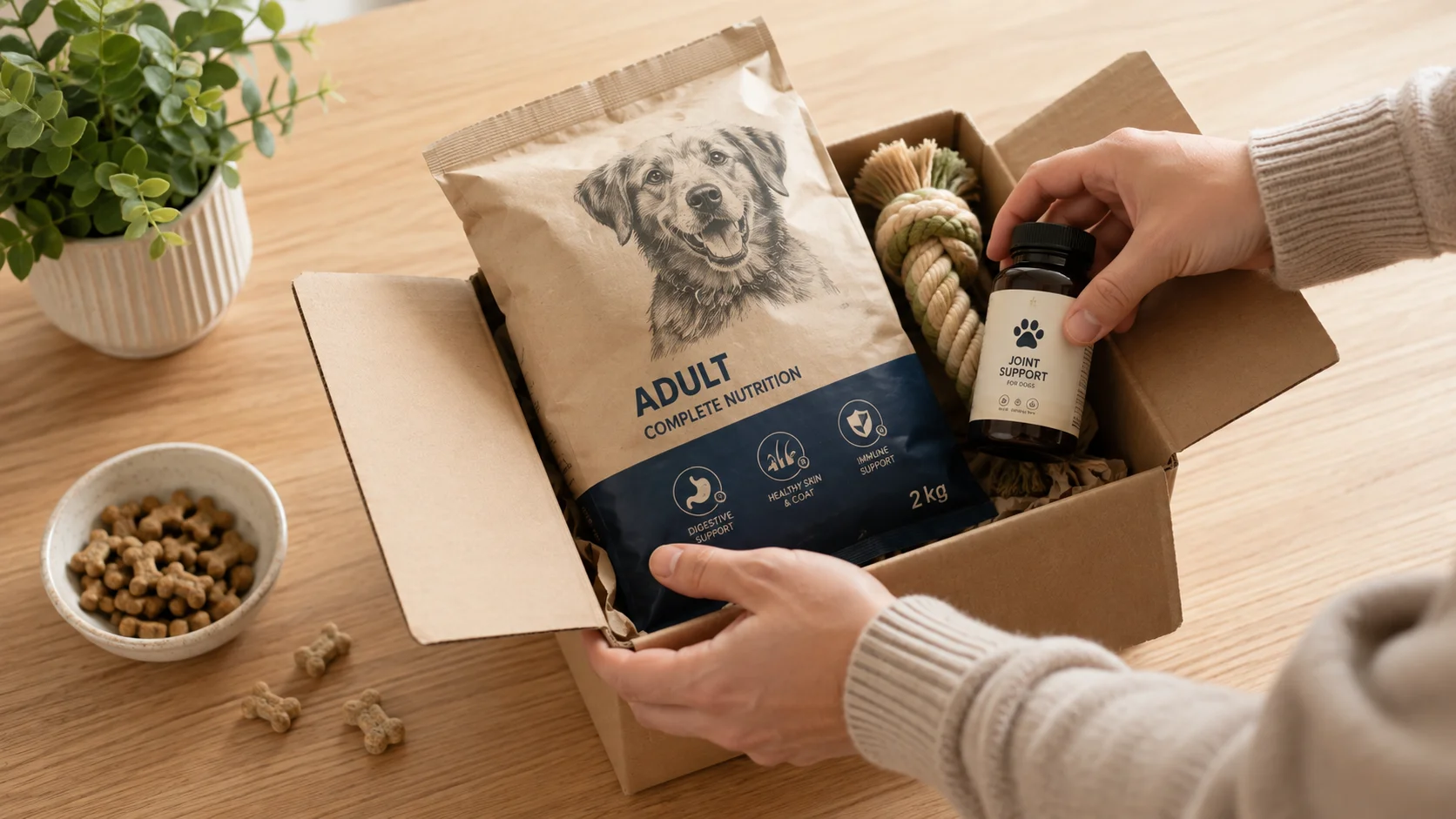
Pet catalogues are usually a mix of three very different businesses wearing one storefront. Each has its own margin, shipping profile, and reorder pattern, and treating them the same is a common way to lose money quietly. The table shows how they actually behave.
| Category | Reorder pattern | Margin & shipping reality |
|---|---|---|
| Consumables (food, litter, treats) | Frequent, on a cycle | Thin margin, heavy to ship, subscription is the fix |
| Health (supplements, flea, dental) | Regular, vet-influenced | Better margin, claims are regulated, trust-sensitive |
| Durables (beds, crates, leads, toys) | Rare, one-off | Higher margin, bulky, drives discovery not repeat |
Durables win you the first visit and the photogenic content. Consumables and health products pay the rent through repeat orders. A healthy pet store uses durables as the shop window and consumables as the engine room, and it merchandises accordingly: bundle a new bed with the food the dog already eats, and you convert a one-off durable buyer into a recurring consumable one.
In Europe there is a margin nuance worth knowing. In the 2023 FEDIAF dataset, dog treats made up only about 9% of dog food volume but 24% of its value, as reported from the FEDIAF Facts and Figures, so treats and health lines can lift a blended margin that food alone would drag down. Merchandising the high-margin add-on next to the low-margin staple is not a trick, it is how the category is built.
Sell three businesses with intent, not one blur. Durables for discovery, consumables for cadence, health lines for margin. The bundle between them is where average order value lives.
Why Shipping Heavy SKUs Quietly Eats Margin
A 15 kg bag of food can cost more to deliver than the profit on the bag. That single fact reshapes the whole store. Carriers price on dimensional weight as well as actual weight, so bulky litter and large food bags get charged twice over, and a free-shipping banner on those items can turn a sale into a loss.
The reflex fix, a blanket free-shipping threshold, backfires in pet because the heaviest items are also the cheapest per kilo. A smarter setup ties free shipping to the subscription, not to a cart value: recurring orders earn the shipping perk, one-off heavy orders do not. That protects margin and pushes buyers toward the cadence you want.
Shipping cost is also a conversion problem, not only a margin one. Unexpected extra costs at checkout are the single most common reason shoppers abandon carts, cited by 48% of them in Baymard Institute’s research, against an overall abandonment rate near 70%. In a category where the parcel is heavy by nature, surfacing the real delivery cost early and framing it against the subscription saving does more than any last-minute code. If shipping surprises are hurting your checkout, that is a fixable hidden shipping cost problem, not a price problem.
A universal free-shipping threshold on a catalogue full of heavy food bags is a slow margin leak. Model delivery cost per SKU by weight and size before you set any threshold, and let subscription, not cart value, earn free delivery.
Compliance Is the Moat and the Trap
This is the part generic store guides skip, and it is the part that carries fines rather than warnings. Pet food, supplements, and even toys sit under real regulation, and the rules differ by market. Get them right and they become a barrier competitors have to clear too. Get them wrong and a listing can be pulled or penalised.
| Market | Core rule | What it controls |
|---|---|---|
| EU | Regulation (EC) No 767/2009 | Feed labelling, ingredient order, permitted claims |
| EU (practice) | FEDIAF Code of Good Practice | How the rules are applied on-pack |
| US | FDA rules and AAFCO models | Labelling, ingredient definitions, safety |
In the EU, Regulation (EC) No 767/2009 governs how pet food is marketed and labelled. Ingredients must be listed in descending order by weight, the food must be identified as complete or complementary, and any claim under Article 13, such as “supports joint health”, has to be objective and backed by evidence the authorities can check. A vague benefit line that reads well in marketing can be a compliance failure on a feed label.
Supplements raise the stakes further, because a health promise you cannot substantiate is both a legal risk and a trust risk. If your range includes them, the rules around supplement compliance should shape your product copy before your copywriter ever sees it. Compliance is not a legal chore bolted on at the end, it is a product-page constraint that decides what you are allowed to say.
The US works differently, and selling across state lines multiplies the work. The FDA sets basic federal labelling and safety rules, but there is no federal product registration. Pet food is regulated state by state, and most states require you to register each product and pay a fee before you can sell it there, following the AAFCO model regulations that each state adopts on its own. AAFCO itself has no enforcement power. A product cleared in one state is not automatically cleared in the next, so a US rollout is a stack of separate registrations, not one approval.
The risk is not limited to your own copy. A customer review that says a supplement “cured my dog’s arthritis” publishes a medical claim under your brand, and in the EU that carries the same exposure as a claim you wrote yourself. Review moderation in food and health categories is a compliance task, not just a spam filter: screen user-generated claims about curing, treating, or preventing conditions before they go live, and keep a record of what you removed and why.
Marketing claims and feed-label claims are governed by different rules. A benefit line copied from an ad into a product description can breach labelling law. Route health and nutrition copy past someone who knows the regulation, not only the brand voice.
What Trust Looks Like in a Pet Store
Generic conversion advice says add reviews and a returns policy. In pet, trust is more specific, because the buyer is choosing on behalf of an animal that cannot tell them it feels unwell. Three signals do the heavy lifting.
Ingredient transparency comes first. Owners scanning for a grain, an allergen, or a protein source want the full composition visible on the page, not hidden in a downloadable sheet. Second is credible expertise: vet input, clear feeding guidance, and honest sourcing read as competence, not decoration. Third is proof with context, reviews that mention the breed, age, or condition the product helped, since “great for my senior Labrador’s joints” converts where a five-star average does not.
These are product-page decisions, and they compound with the usual conversion work. A pet product page that answers the composition question, the feeding question, and the “will my animal actually eat this” question removes the real friction. That is where product page optimisation earns its keep, and where broader conversion rate optimisation should focus first in this niche.
Add a short “who it suits” line to every consumable: species, life stage, and one condition it addresses. It answers the buyer’s real question faster than a spec table and lifts both conversion and review quality.
The Shopify Setup a Pet Brand Actually Needs
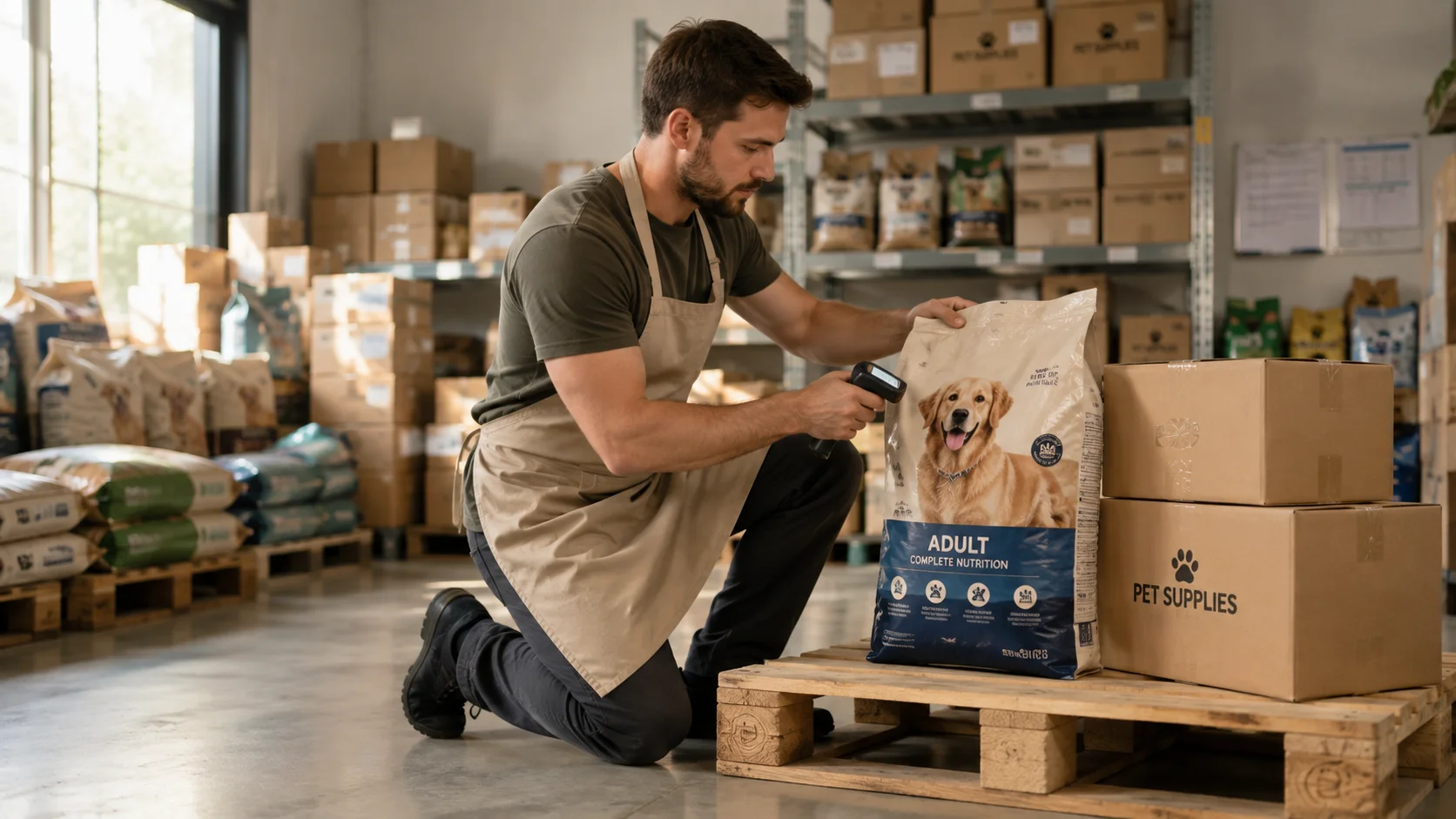
Shopify handles a lot of this well by default, which is exactly why the niche-specific choices matter more than the theme. Three setup decisions separate a store built for repeat consumption from one built for one-off sales.
First, plan and app stack follow the model. A basic catalogue runs on any plan, but the moment subscription and per-SKU shipping logic come in, you need a subscription app and shipping rules that price by weight and dimension. Pick the subscription tool deliberately, because it becomes the backbone of your revenue, not a plugin.
Second, structure the catalogue around cadence and species, not just product type, so a returning buyer can reorder in two taps and a new buyer can filter to their animal instantly. Third, protect speed. Pet catalogues get image-heavy fast with lifestyle shots and packaging photos, and a slow store loses the mobile reorder you depend on. A regular pass against a page speed checklist keeps the reorder path quick.
Discovery still runs on organic search, since owners search for specific foods, breeds, and conditions constantly. Clean product schema and a real content plan turn that intent into traffic, and both sit at the centre of a durable Shopify growth strategy for the category.
Choose the subscription app and weight-based shipping first, structure the catalogue by species and cadence second, and guard speed and search visibility throughout. The theme is the least important decision here.
A Worked Example: One Store, End to End
To make this concrete, take a small dog-nutrition store with around 40 SKUs. The figures below are illustrative, not a promise, but the structure is exactly how the pieces fit together.
The catalogue splits into three jobs. Eight core food SKUs are the engine that drives reorder revenue. About a dozen treats and health SKUs carry the margin. Roughly twenty durables, beds, bowls, and leads, win the first visit. Collections are organised by species and life stage, so a returning buyer reorders in two taps and a new buyer filters to their animal at once.
The hero SKU is a 15 kg food bag at €55 that lasts about 35 days. Autoship is set to 33 days, not a flat 30, so the bag lands just before it runs out. Free shipping is tied to the subscription, so a heavy one-off order pays real delivery while the subscriber does not. That single rule protects margin and rewards the cadence you want.
| Buyer type | Orders per year | Value per year (illustrative) |
|---|---|---|
| One-off buyer | ~2 | ~€110 |
| Autoship subscriber | ~10 | ~€550 |
On the same product, the subscriber is worth roughly five times the one-off buyer, because cadence, not discount, does the work. Add one treat or health item to every third order and the gap widens again while the blended margin improves. This is the whole argument of the article inside one store: build for repeat consumption, and the maths changes.
The structure is the strategy. Three catalogue jobs, a subscription timed to real consumption, and shipping tied to that subscription turn one product into roughly five times the annual value per customer.
Common Mistakes Pet Brands Make on Shopify
Most of the damage in this niche is self-inflicted and repeatable. The recurring ones:
- Offering blanket free shipping on heavy food bags and litter, then wondering where the margin went.
- Treating subscription as a discount instead of a convenience, which trains buyers to expect a permanent price cut.
- Setting one reorder interval for every SKU, so reminders arrive too late or far too early.
- Copying marketing claims onto feed labels and product pages without checking the labelling rules.
- Hiding full ingredient lists behind a tab or a PDF, which is exactly the information a careful owner came to find.
- Merchandising durables and consumables identically, missing the bundle that lifts average order value.
Where This Leaves You
A pet supply brand is not a general store that happens to sell for animals. It is a repeat-consumption business with thin margins on its bestsellers, heavy parcels, regulated claims, and an unusually loyal customer who reorders on a clock. Build the Shopify store for that reality, subscription first, shipping modelled by weight, compliance built into the copy, trust earned with transparency, and the niche’s loyalty works in your favour. Copy a generic DTC template and every structural feature of the category works against you instead.
See where your pet store is leaking margin or missing reorders
Conversion Audit
We find the checkout, shipping, and product-page friction costing you orders.
Find the friction →Klaviyo Shopify Setup
Replenishment and reorder flows timed to how fast each product runs out.
Set up autoship →Shopify SEO Agency
Turn breed, food, and condition searches into repeat customers.
Grow my traffic →Frequently Asked Questions
Yes. Shopify handles a pet catalogue, subscriptions, and weight-based shipping well once the right apps are added. The niche-specific work is choosing a subscription tool, pricing shipping by weight and size, and structuring the catalogue by species and reorder cadence rather than product type.
A subscription app schedules recurring orders so food and litter arrive before they run out. Around 83% of Chewy’s net sales come from its Autoship programme, which shows how central this is. Set the reorder interval per product based on how fast it is used, not a flat 30 days.
Food bags and litter are heavy and bulky, and carriers charge on dimensional weight as well as actual weight. That makes the cheapest items per kilo the most expensive to ship. Tie free shipping to subscription rather than a flat cart value to protect margin on heavy one-off orders.
Yes. Regulation (EC) No 767/2009 governs how pet food is marketed and labelled in the EU, including ingredient order, whether a food is complete or complementary, and permitted claims. A health claim such as supports joint health must be objective and backed by evidence, on the label and on the product page.
A basic catalogue runs on an entry plan, but subscriptions, per-SKU shipping rules, and B2B usually push you to a higher tier. Let the model decide: if recurring orders and weight-based shipping are core to your revenue, choose the plan that supports them cleanly rather than the cheapest one.
Estimates vary by research firm, but Grand View Research put global pet care ecommerce near $102 billion in 2025, growing about 7.8% a year toward roughly $147.6 billion by 2030. The more useful point is that spend is concentrated in consumables people reorder on a cycle.
Consumables dominate. In the US, food and treats alone made up 43.3% of pet spending in 2024, according to the APPA. Durables like beds and toys drive discovery and carry better margin, while consumables and health products drive repeat orders and lifetime value.
Show the full ingredient list on the page, add credible feeding guidance and sourcing detail, and use reviews that mention breed, age, or condition. Owners buy on behalf of an animal that cannot give feedback, so transparency and context convert better than a star average alone.
Vladyslav Kharkivskyi